 Tractatus 5.5303 - "Roughly speaking, to say of two things that they are identical is nonsense, and to say of one thing that it is identical with itself is to say nothing at all.
Saturday, May 28, 2011
Wittgenstein on identity
Tractatus 5.5303 - "Roughly speaking, to say of two things that they are identical is nonsense, and to say of one thing that it is identical with itself is to say nothing at all.

Friday, May 27, 2011
Can crowdsourcing make all articles excellent?
Ex-climate scientist William Connolley questions the logic of an earlier post, saying that
On the other possible claims that William mentions, I disagree that "crowdsourcing makes all wikipedia articles excellent" is trivially false. Since we agree it is false, it follows that crowdsourcing fails to make certain articles excellent, and it is an interesting, and therefore non-trivial, question whether there are certain types of article, or certain types of information that crowdsourcing fails to make excellent, and if so why.
I don't propose to answer these non-trivial questions here - I merely point out that they are obviously non-trivial. I have made suggestions in the past. I suggested that "crowdsourcers are typically shy of deleting material, so articles tend to grow to the point of being unreadable. Second, they have no sense of where material ought to go. So the article tends to lose any basic thread it once had. Third, they have no sense of which facts to include, and which to leave out. What facts about Aristotle would you include in a three page article?". I have also observed that, as a general rules, Wikipedia's coverage of subjects like Boron and set theory is pretty good. On the arts and humanities it is a complete disaster. As Vaknin says, "they are replete with nonsense, plagiarism, falsities, and propaganda".
So it's an interesting question as to whether the poor quality of arts subjects is simply a matter of accident, and could have been the other way round. Another interesting (and therefore non-trivial) question is whether crowdsourcing is better at 'low culture' than 'high culture'. My view is that it is pretty good at articles like this, but really dreadful at articles like this. More later.
I'm not really sure exactly what claim about crowdsourcing you are calling false. If the claim is, crowdsourcing makes all wikipedia articles excellent, then it is trivially false. If the claim is, crowdsourcing is capable of creating excellent articles, then it is trivially true. Probably you mean something else, but what?Well, as to exactly what claim of crowdsourcing I was originally calling false, in this post I cited the articles on Durandus and Roscellinus as evidence against the claim that crowdsourcing makes Wikipedia "instantly responsive to new developments". The fact that these articles are entirely plagiarised or 'copied' from the 1913 Catholic Enyclopedia and Britannica 1911 suggests that Wikipedia is somewhat sluggish on the 'new development' front.
On the other possible claims that William mentions, I disagree that "crowdsourcing makes all wikipedia articles excellent" is trivially false. Since we agree it is false, it follows that crowdsourcing fails to make certain articles excellent, and it is an interesting, and therefore non-trivial, question whether there are certain types of article, or certain types of information that crowdsourcing fails to make excellent, and if so why.
I don't propose to answer these non-trivial questions here - I merely point out that they are obviously non-trivial. I have made suggestions in the past. I suggested that "crowdsourcers are typically shy of deleting material, so articles tend to grow to the point of being unreadable. Second, they have no sense of where material ought to go. So the article tends to lose any basic thread it once had. Third, they have no sense of which facts to include, and which to leave out. What facts about Aristotle would you include in a three page article?". I have also observed that, as a general rules, Wikipedia's coverage of subjects like Boron and set theory is pretty good. On the arts and humanities it is a complete disaster. As Vaknin says, "they are replete with nonsense, plagiarism, falsities, and propaganda".
So it's an interesting question as to whether the poor quality of arts subjects is simply a matter of accident, and could have been the other way round. Another interesting (and therefore non-trivial) question is whether crowdsourcing is better at 'low culture' than 'high culture'. My view is that it is pretty good at articles like this, but really dreadful at articles like this. More later.
Thursday, May 26, 2011
The Logic Museum is excommunicated
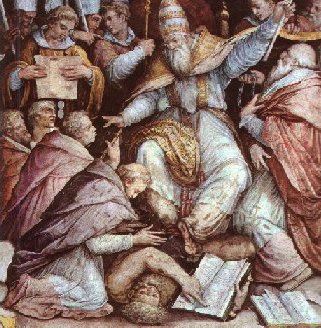 Today is May 26, the anniversary of my namesake William of Ockham's flight from Avignon after a dispute with the Pope about Franciscan poverty. That strangely coincides with two other related things.
 First, the excommunication of my website The Logic Museum from Wikipedia. This means that any mention of the Museum, or any outbound link to it from Wikipedia, is now prohibited. As my readers will know, the Museum is primarily a repository of primary sources on logic, mainly medieval texts, that are difficult to locate even in a good university library (some of the texts I plan on publishing are unavailable even in London). What did the poor creature do to deserve this? (I am told it is because of my criticism of Wikipedia here, and because of other criticism by the owner of the hosting site, Greg Kohs).
Second, Ockham's flight is mentioned on the main page of Wikipedia - see the in the 'on this day' column. "On this day ... 1328 – William of Ockham, originator of the methodological principle Occam's razor, secretly left Avignon under threat from Pope John XXII". This is ironic. As every medieval scholar knows, Ockham was not the originator of this principle at all (although he often used it, and it bears his name). If they had been allowed to link to the Logic Museum, Wikipedians would have learned this. They could have looked at this essay by Thorburn, who first debunked the claim nearly 100 years ago. Or they could look in the article on Ockham in the Logic Museum. But they can't.
And as I commented last year, there are many mistakes in the article itself. Some were cleaned up (by someone I notified by email). But, as of this morning, many errors or significant omissions remain.
- The most significant error in the article still remained until this morning (when someone spotted a draft of this post and changed it. It said that Ockham does accept the Principle of Sufficient Reason, when of course he clearly doesn't. Until this morning, that mistake was there for five years. And there is still a problem, because the claim is spliced with an unrelated one sourced from the Catholic Encyclopedia, about Ockham's view on the distinction between essence and existence, between the active and passive intellect.
- It stills contains the odd claim that Ockham has been called a "terminist", to distinguish him from a nominalist or a conceptualist, is from the Catholic Encyclopedia. Thus the article combines what is probably wrong ('terminism' can be consistent with nominalism**) with the section from the SEP which is intended for an academic audience, and is impenetrable out of context.
- As I commented just this week, the article on Durandus does not mention that Durandus was one of those assigned by John XXII to investigate Ockham’s nominalism. That is because the whole article was plagiarised from the Catholic Encyclopedia, written 100 years ago. Nor does the article on Ockham.
If you feel strongly about this, and I think you should, you can comment on Jimmy Wales page here.
** Particularly in the case of Ockham's nominalism, defined as the view that we should not multiply entities according to the multiplicity of names.
Wednesday, May 25, 2011
Plagiarism from old sources
I had a mild disagreement with climate scientist William Connolley here on my use of the term 'plagiarism'. He objected that the articles in question did mention that they 'incorporate' material from the Catholic Enyclopedia. This is a matter of semantics. To my mind the word 'incorporates' suggests 'proper subset of' rather then 'equals', but let's pass over that. It matters in a very real way that the magic of crowdsourcing is little more than indiscriminate copying of the scholarship of a century ago.
The article Durandus misses all the medieval scholarship that happened from around 1913 until now. In the case of medieval studies, that is quite a lot. The discipline did not really get started until the nineteenth century, and much of the primary source material - the works themselves - did not become available until well into the twentieth century. (Indeed, the work that Jack and I are currently translating did not become available in a critical edition until a few years ago, and has never been published in English).
Thus the Wikipedia article necessarily misses some important facts. For example, that Durandus was one of those assigned by John XXII to investigate Ockham’s nominalism. Or the centrality of his work on the category of relation – first highlighted by Koch in 1927. The article does not even mention the dates of Durandus’ work (the first Sentences commentary between 1303-8, the second between 1310-12) and omits to mention a number of his other works. As any scholar knows, assigning a date to a source is of crucial importance, and is a painful business. Wikipedia, which is good at basic facts, and lists of things, would be an ideal source of such information. But it isn't.
You will say I am knocking Wikipedia again. But the point underlying this is not to knock Wikipedia, but rather a false claim about 'crowdsourcing'. We should be thanking the scholars of 100 years ago for Wikipedia, not the crowd (or Jimmy Wales, who is supposed to have invented the whole thing).
The article Durandus misses all the medieval scholarship that happened from around 1913 until now. In the case of medieval studies, that is quite a lot. The discipline did not really get started until the nineteenth century, and much of the primary source material - the works themselves - did not become available until well into the twentieth century. (Indeed, the work that Jack and I are currently translating did not become available in a critical edition until a few years ago, and has never been published in English).
Thus the Wikipedia article necessarily misses some important facts. For example, that Durandus was one of those assigned by John XXII to investigate Ockham’s nominalism. Or the centrality of his work on the category of relation – first highlighted by Koch in 1927. The article does not even mention the dates of Durandus’ work (the first Sentences commentary between 1303-8, the second between 1310-12) and omits to mention a number of his other works. As any scholar knows, assigning a date to a source is of crucial importance, and is a painful business. Wikipedia, which is good at basic facts, and lists of things, would be an ideal source of such information. But it isn't.
You will say I am knocking Wikipedia again. But the point underlying this is not to knock Wikipedia, but rather a false claim about 'crowdsourcing'. We should be thanking the scholars of 100 years ago for Wikipedia, not the crowd (or Jimmy Wales, who is supposed to have invented the whole thing).
Tuesday, May 24, 2011
Ontological argument on Youtube
Yes really. You can tell it's the internet because someone has commented "that's an awesome argument" and puts a smiley face at the end :(
With Zimmerman and Plantinga - it does at least include what Anselm actually says.
With Zimmerman and Plantinga - it does at least include what Anselm actually says.
Reference and intention
In my last post I asked which towers Tolkien was referring to in his title 'The Two Towers'. I should have said intending to refer to. For (as I am using the term), we cannot fail to refer. I argued this here, but there is more to say. Consider:
The possibility of there being separate 'referential chains' within a narrative which are identified as co-referring at some later point provides a device that writers have used for dramatic purposes. In Dumas' The Vicomte de Bragellone, we are introduced to a traveller at a hostelry in Blois, 'a man of scarcely 30 years, handsome, tall, austere, or rather melancholy, in all his gestures and looks'. In the story that follows, this person is referred to as 'the gentleman', 'the traveller' and, intriguingly, as 'the unknown'. Intriguingly, because the expression 'the unknown' identifies the stranger perfectly well within the story, where he is actually 'known' or identifiable, but not outside the story, even though the expression signals that he is known or identifiable under another name or description. Later we learn that he is Charles II, King of England.
Sometimes, as with 'The Two Towers', an author may fail to disclose a fictional identity. In this case, we can ask what he may have intended to refer to. The point is that reference is always fixed and determinate, and depends on meaning and convention. Intended reference is not.
"Tales out of the South", Gollum went on again, "about the tall Men with the shining eyes, and their houses like hills of stone, and the silver crown of their King and his White Tree: wonderful tales. They built very tall towers, and one they raised was silver-white, and in it there was a stone like the Moon, and round it were great white walls. O yes, there were many tales about the Tower of the Moon."I have emphasised the co-referring expressions. There are actually two sets. The first begins with an indefinite noun phrase 'one', and continues with the terms 'it', 'it', 'the Tower of the Moon' as uttered by Gollum, the relative pronoun 'that' uttered by Frodo, and 'the Tower of the Moon' as uttered by Frodo at the end. The reason for the co-reference is entirely due to rules of use for singular terms. Even if Tolkien had intended to refer to different things, he would have failed, because of rules like these. His intention is realised only by the instruments - the signs - he is using, which give a fixed and determinate reference. The other set has one member in this passage: 'Minas Ithil'. This set was begun much earlier in the book, and each member has likewise a determinate reference back to the previous ones. Tolkien joins them at the point where Frodo says "That would be Minas Ithil". Now we know (as long as we know the identity statement uttered at this point) that the two chains are co-referring. But this identity is not a grammatical rule or some other 'rule of narrative', but is contingent upon a statement made within the narrative - the identity statement "A (that tower) = B (Minas Ithil)".
"That would be Minas Ithil that Isildur the son of Elendil built," said Frodo. "It was Isildur who cut off the finger of the Enemy."
"Yes, He has only four on the Black Hand, but they are enough," said Gollum shuddering. "And He hated Isildur's city."
"What does he not hate?" said Frodo. "But what has the Tower of the Moon to do with us?"
The possibility of there being separate 'referential chains' within a narrative which are identified as co-referring at some later point provides a device that writers have used for dramatic purposes. In Dumas' The Vicomte de Bragellone, we are introduced to a traveller at a hostelry in Blois, 'a man of scarcely 30 years, handsome, tall, austere, or rather melancholy, in all his gestures and looks'. In the story that follows, this person is referred to as 'the gentleman', 'the traveller' and, intriguingly, as 'the unknown'. Intriguingly, because the expression 'the unknown' identifies the stranger perfectly well within the story, where he is actually 'known' or identifiable, but not outside the story, even though the expression signals that he is known or identifiable under another name or description. Later we learn that he is Charles II, King of England.
Sometimes, as with 'The Two Towers', an author may fail to disclose a fictional identity. In this case, we can ask what he may have intended to refer to. The point is that reference is always fixed and determinate, and depends on meaning and convention. Intended reference is not.
Sunday, May 22, 2011
What are "The Two Towers"?

 David Brightly asks "how sometimes my mental file [corresponding to a singular term] coheres with yours sufficiently to give rise to the sense of reference to a single external object".
 That's a good question which I can't answer right now. But let's begin with a valid question about reference in fiction. As I have argued in earlier posts (e.g. here) there is a perfectly valid sense of 'refer to' where it takes an fictional accusative. For example, we can ask who the phrase "The Lord of the Rings" refers to. And the Wikipedia page on The Lord of the Rings even gives us an answer, saying that "the title of the novel refers to the story's main antagonist, the Dark Lord Sauron".
Equally, we can ask what the ‘Two Towers’ in the Lord of the Rings are, since there are so many towers in the book. Some of these are:
- Orthanc, the black tower of Isengard in the West, the stronghold of the wizard Saruman.
- Barad-dûr, the fortress of Sauron in the heart of Mordor in the East
- The Tower of Ecthelion, the White Tower of the city of Minas Tirith, on the Western border of Mordor
- The Tower of Black Sorcery in Minas Morgul Vale, on the other side of the border from Minas Tirith
- The Tower of Cirith Ungol above the Morgul Pass on the northern side of the Morgul Vale.
22 January 1954: It must if there is any real reference to volume II refer to Orthanc and The Tower of Cirith Ungol . But since there is so much made of the basic opposition of the Dark Tower and Minas Tirith, that seems very misleading. There is, of course, actually no real connecting link between Books III and IV, when cut off and presented separately as a volume*.This is because the first book of the Volume deals with Saruman and the second book of the Volume deals with Frodo and Sam's passage into Mordor and his capture in the Tower of Cirith Ungol. Note his use of the term ‘refers to’. On the other hand, in his original design for the jacket of ''The Two Towers'' the Towers are certainly Orthanc and Minas Morgul (Orthanc is shown as a black tower, three-horned, with the sign of the White Hand beside it; Minas Morgul is a white tower, with a thin waning moon above it, an allusion to its original name, Minas Ithil, the Tower of the Rising Moon). In yet another letter Tolkien says the question can be left undecided, and “The Two Towers” could refer to three possible pairs: Isengard/Barad dur; Minas tirith/Barad dur; or Isengard/Cirith Ungol.
More later, but clearly the question of which character is being referred to involves authorial intention. There is a lovely discussion on a Tolkien fansite here. Here also is a link to The Battle of Evermore, a Tolkien-inspired number by the English rock group Led Zeppelin. Some people think that the song may be referring to the Battle of Pelennor Fields.
* From Hammond, Wayne G, Douglas A. Anderson, JRR Tolkien: A Descriptive Bibliography, New Castle, Delaware and Winchester : Oak Knoll Books and St Paul's Bibliographies 2002
Saturday, May 21, 2011
Old wine in new bottles
There is an interesting claim by Tim Crane in his paper "The Singularity of Singular Thought" that bears a marked resemblance to something said by Duns Scotus in his Questions on Aristotle's Perihermenias. Crane says
* Book I Question 6 n43. As some readers of this blog will know, I am working with Jack Zupko on an English translation of this early work of Scotus. This may even get published this year, who knows.
What is relevant to generality is not that as a matter of fact the information is true of many things, but the fact that a thinker can make sense of it being true of many things (or of different things in different possible situations). Conversely, what is relevant to singularity is not the fact that the information in one’s file is true of just one thing, but that one cannot make sense of it as being true of many things.Scotus says
Terminus communis secundum quod habet rationem communis est natura prout concipitur sub ratione ‘dicibilis de pluribus’, et ita suppositum est natura concepta apud intellectum sub ratione ‘indicibilis de pluribus.* “A common term, according as it has the nature of the common, is a nature as conceived under the aspect ‘predicable of many,’ and so a suppositum is a nature conceived in the understanding under the aspect ‘incapable of being predicated of many".A suppositum is a technical term difficult to translate, and is often left untranslated. Scotus here often uses it to mean any object that falls within the range of a common term (or the 'value' of a variable, if you like). Thus any man is the suppositum of the common term 'man'.
* Book I Question 6 n43. As some readers of this blog will know, I am working with Jack Zupko on an English translation of this early work of Scotus. This may even get published this year, who knows.
Auden on proper names
“Proper names are poetry in the raw. Like all poetry they are untranslatable.” – W.H. Auden. On the 'untranslatability' of proper names, see also argument 2 of the arguments for direct reference.
Friday, May 20, 2011
The roots of direct reference - argument 4
I borrowed this one from Teresa Marques' paper "On an argument of Segal’s against singular object-dependent thoughts" (Disputatio, volume II, no. 21, pp. 19-37) although it owes much to John McDowell and Gareth Evans.
Argument Four. Truth-conditional semantics rests on the assumption that the conditions for the truth of a sentence give the sentence’s meaning or significance. But there is no truth evaluable content when reference failure occurs. If there are no truth conditions, then there is no thought-content. Hence, if one’s utterance of a sentence has no truth-conditions, then it also has no truth conditions and therefore also no significance or meaning. Likewise, an utterance of such a sentence fails to express a singular thought.
Argument Four. Truth-conditional semantics rests on the assumption that the conditions for the truth of a sentence give the sentence’s meaning or significance. But there is no truth evaluable content when reference failure occurs. If there are no truth conditions, then there is no thought-content. Hence, if one’s utterance of a sentence has no truth-conditions, then it also has no truth conditions and therefore also no significance or meaning. Likewise, an utterance of such a sentence fails to express a singular thought.
Crane on singularity
 In an earlier post I looked approvingly at Tim Crane's views on singularity, and promised to follow up with some things I don't like so much. Now what I don't like so much is Crane's characterisation of failed reference. He says that "a thinker can think about a particular object and yet fail to refer to that object in thought", and that “There are many cases where thinkers appear to be having singular thoughts in this sense even though the object of the thought does not exist: aiming to refer to a specific object in this case fails to ‘hit’ the target object" (my emphasis).
On the contrary. As I have argued here, a proper name individuates: it tells us which individual a proposition is about. It is easy to show (a) that it cannot fail to do this, once understood, and (b) that it has no other function.
Proof:
(a) A proper name individuates by telling us which sentences are verified by a single subject. The sentences "Frodo is a hobbit ... Frodo has large feet" together say that some hobbit has large feet, i.e. a single thing is both a hobbit and has large feet, and not that some thing is a hobbit and that some thing (possibly a different thing) has large feet. You simply haven't understood how the proper name works if you think that both sentences could be true without being true of a single thing. I say a bit more about this here.
(b) This is all that proper names do. (i) They have no descriptive sense. They tell us which individual a sentence is about by telling us which individual it is the same as. The 'Frodo' of the second sentence above tells us that if the second sentence is true, it is true of the same thing as the first sentence, if true, is true of, and no more. This is exactly how proper names individuate in stories, and it is clear they can do no more than this. Nor can they do any more even if the story is true, and all the names 'refer'. (ii) They have no 'extra-linguistic' sense. As I argued here, if any piece of language has an important communication function, we should be able to tell whether it has an important communication function. One of the most important features of communicating with someone is that they should know they are being communicated to. Therefore, if non-empty proper names communicate information that empty proper names don’t, we should know this, and we should be able to tell whether a name was empty or not. But we can't do this. We do not know for certain whether the Christ Myth theory is true or not, and thus we don't know whether the name 'Jesus' is empty or not.
There is nothing that a proper name could try to do, that it does not do. A proper name tells us which character is being written about, and it does this successfully whether in a story ('King Arthur found a sword') or in a piece of history ('King Albert burned the cakes'). Thus Crane's idea that it could possibly fail to accomplish anything is a mistake.
Thursday, May 19, 2011
Web 2.0 Nonsense on Stilts
Here. Nonsense on stilts. Every cliche or stereotype of 'Web 2.0', and Wikipedia as well. It begins with the (desperately flawed) study in Nature which supposedly showed "few differences in accuracy" between Wikipedia and the Encyclopedia Britannica, comments approvingly on the "bogglingly complex and well-staffed system for dealing with errors and disputes on Wikipedia", without mentioning about how astonishingly corrupt this system is. It argues that there are three main advantages to Wikipedia:
- Wikipedia offers far richer, more comprehensive citations to source materials and bibliographies on- and offline, thereby providing a far better entry point for serious study (yes, but many of these 'citations' are completely fake, as was proved in this case, and many others are simply cherry-picked).
- It is instantly responsive to new developments (and yet articles like Durandus or Roscellinus are entirely plagiarised from the century old Catholic Enyclopedia and Britannica 1911)
- It has 'history' and 'talk' pages (of course, but as the article immediately concedes "a load of dimwitted yelling and general codswallop may also emerge", and usually does).
The computer thus holds out the promise of a technologically engendered state of universal understanding and unity, a state of absorption in the Logos that could knit mankind into one family and create a perpetuity of harmony and peace.And so Wikipedia, along with other "crowd-sourced" resources, is wreaking a certain amount of McLuhanesque havoc on conventional notions of "authority," "authorship," and even "knowledge." We have reached 'the end of truth'
Wikipedia is like a laboratory for this new way of public reasoning for the purpose of understanding, an extended polylogue embracing every reader in an ever-larger, never-ending dialectic. Rather than being handed an "authoritative" decision, you're given the means for rolling your own.Fortunately the commenters were somewhat better informed than the author of this silly and foolish article. One of them writes
This article is foolish and actually mischaracterizes what Wikipedia is doing. Wikipedia is based around a strong hierarchy between experts and everyone else. Credentialed experts do primary research. They look at the actual stuff. Wiki-editors do secondary research. They read the sources that the experts write and debate the meaning of those sources. This is the governance that is built into the site, and it is a hierarchical one. Wiki-editors would only be “fellow travelers” with experts if they did primary research themselves. But how many times have you seen wiki-editors cite their own research in French or Russian archives, or their own experiments on bacteria, or their own mathematical proofs? Never. And that’s the difference.Correct. Not that even this works, in many cases, but I have discussed all that elsewhere.
Wikipedia hardly devalues experts. It enshrines them like never before. Every statement in a Wikipedia article has to be backed up with a citation to an article or book produced by a journalist, an academic, a scientist, or some other credentialed expert who has carried out primary research according to currently prevailing methods in journalism or academia. In no way are the wiki-writers “fellow travelers” with these expert sources in the governance of the site. Their job is only to debate which wording best characterizes the existing expert sources for the purposes of an encyclopedia article. This is all great as a learning exercise, and I applaud them for doing so, but it does not equalize experts and readers.
Wednesday, May 18, 2011
The Singularity of Singular Thought
I just found an excellent paper by Tim Crane - "The Singularity of Singular Thought". Today I will say some things I like about the paper, tomorrow some things I don't like so much.
Crane begins by picking up a remark by Quine that "a singular term is one that ‘purports to refer to just one object’". This suggests to Crane that a singular term is one that appears or ‘claims’ to be doing something – referring to just one object, and which still appears to do this even if there is no such object. Readers of Beyond Necessity will understand that I find this attractive. Common sense suggests that a proper name, together with many other types of singular terms, has the same semantics whether or not there is an object corresponding to it. The semantics of proper names, I have argued, is object independent.
The difficulty, as Crane acknowledges, is to explain how this is consistent with the distinction between singular and general thought, which any adequate theory of mind must account for. As I suggested in some earlier posts, there are apparently strong arguments showing that we can only explain the distinction by invoking semantic dependency on objects. Singular thoughts (according to these arguments) are precisely those which depend for their existence on the existence of the objects they are about. John McDowell defines a singular thought as ‘a thought that would not be available to be thought or expressed if the relevant object, or objects, did not exist’.
Crane's objective is a theory of singular thought - of which he provides only a brief sketch - which accommodates the distinction between singular and general thought, "but which also takes seriously the idea that a singular thought might merely purport to refer. In other words, a thinker can think about a particular object and yet fail to refer to that object in thought.”
More tomorrow.
Crane begins by picking up a remark by Quine that "a singular term is one that ‘purports to refer to just one object’". This suggests to Crane that a singular term is one that appears or ‘claims’ to be doing something – referring to just one object, and which still appears to do this even if there is no such object. Readers of Beyond Necessity will understand that I find this attractive. Common sense suggests that a proper name, together with many other types of singular terms, has the same semantics whether or not there is an object corresponding to it. The semantics of proper names, I have argued, is object independent.
The difficulty, as Crane acknowledges, is to explain how this is consistent with the distinction between singular and general thought, which any adequate theory of mind must account for. As I suggested in some earlier posts, there are apparently strong arguments showing that we can only explain the distinction by invoking semantic dependency on objects. Singular thoughts (according to these arguments) are precisely those which depend for their existence on the existence of the objects they are about. John McDowell defines a singular thought as ‘a thought that would not be available to be thought or expressed if the relevant object, or objects, did not exist’.
Crane's objective is a theory of singular thought - of which he provides only a brief sketch - which accommodates the distinction between singular and general thought, "but which also takes seriously the idea that a singular thought might merely purport to refer. In other words, a thinker can think about a particular object and yet fail to refer to that object in thought.”
More tomorrow.
Tuesday, May 17, 2011
The roots of direct reference 3
Argument Three. A definition must provide the genus of the thing defined, and the specific difference by which the species defined is distinguished from every other species belonging to that kind. Thus only a species can be defined. But a proper name be defined, for individuals are not species. They have no specific difference, and can only be distinguished by the proper name itself. Thus the meaning of a proper name is the individual it names.
Suggested by Reid again. Of the Intellectual Powers, pp 219-20. See also Argument 1, argument 2.
Suggested by Reid again. Of the Intellectual Powers, pp 219-20. See also Argument 1, argument 2.
Monday, May 16, 2011
The roots of direct reference - argument 2
Argument Two (argument 1 is here). When words in different languages mean the same thing, this reflects a common reality. Thus, most human languages have words for sky, water, nose, earth, tree, animal etc. Even when these are words for individuals (sun, moon, pole star), it is because the individuals are well known to all people in all (or most) places. But most individuals are local, known only to the persons inhabiting that place, and so do not reflect a common reality. Thus words for individuals - proper names - are confined to a corner of the world.
Thus the meaning of most proper names is unknown to nearly all people in the world; they have no corresponding words in other languages; and they are not even reckoned to be words of their own language*. It follows that the meaning of a proper name involves direct acquaintance with the individual for which it is a name.
* The substance of this argument is almost entirely borrowed from Thomas Reid, T., Essays on the Intellectual Powers of Man, The Works of Thomas Reid,Edinburgh
Thus the meaning of most proper names is unknown to nearly all people in the world; they have no corresponding words in other languages; and they are not even reckoned to be words of their own language*. It follows that the meaning of a proper name involves direct acquaintance with the individual for which it is a name.
* The substance of this argument is almost entirely borrowed from Thomas Reid, T., Essays on the Intellectual Powers of Man, The Works of Thomas Reid,
PS I looked at my notes and also found this by Locke (Essay III. iii. 3. Pringle-Pattison p. 227).
Men learn names, and use them in talk with others, only that they may be understood: which is then only done when, by use or consent, the sound I make by the organs of speech, excites in another man's mind who hears it, the idea I apply it to in mine, when I speak it. This cannot be done by names applied to particular things; whereof I alone having the ideas in my mind, the names of them could not be significant or intelligible to another, who was not acquainted with all those very particular things which had fallen under my notice.
Augustine in the Logic Museum
Augustine On Lying is now in the Logic Museum. He discusses some subtle cases beyond those which I discussed here. For example (4.4) if lying is telling a falsehood with the purpose of deceiving, what if I purposely say something false to someone who I know will not believe me, but who believes I am serious? Conversely, there is the opposite case of a person who speaks the truth in order to deceive. Knowing he will not be believed, he speaks the truth on purpose because he knows or thinks that what he says will be reckoned false, merely because it is spoken by him.
He also mentions the case of joking, which are not lies “seeing they bear with them in the tone of voice, and in the very mood of the joker a most evident indication that he means no deceit”.
He also mentions the case of joking, which are not lies “seeing they bear with them in the tone of voice, and in the very mood of the joker a most evident indication that he means no deceit”.
Saturday, May 14, 2011
The Roots of Direct Reference
 I’ve talked for a while about why the theory of Direct Reference may be false. (For the purpose of this discussion, call ‘Direct Reference’ the theory that part or all of the meaning of a proper name requires the existence of a named object). The primary reason for believing that it is false is the fact that fictional names are meaningful. I have discussed this a few time, but particularly here. The information that a proper name communicates to us is exhausted by what it would communicate us even if it had no ‘referent’ at all. The mere fact of the existence of a referent adds no further information to what the name already tells us, as is shown by meaningful texts like the New Testament, where we cannot be completely sure whether any of the proper names have a referent at all.
Even though the primary reasons for believing the theory is false are manifest and obvious, we must talk about the reasons that people have thought that theories of direct reference are true, for these are prima facie objections to any theory that is opposed to direct reference.
Argument One. A term signifies either a property or an object*. But properties are repeatable. A property like being white, or running, or being bald can be instantiated by many individuals. Even a property that can only be had by one individual at a time (being the tallest living philosopher) can be instantiated by different individuals at successive times, or could be instantiated by a different individual than the one that possesses it now. If a proper name like 'Socrates' signified a property, even a unique property, it would make sense to say that this individual is Socrates on Tuesday, but that someone else is Socrates on Wednesday. Or that this invidual is Socrates today, but might not have been Socrates. But that makes no sense. A proper name does not signify something that is repeatable, therefore does not signify a property. Therefore it signifies an object. Therefore an object is part or all of the meaning of a proper name, and the theory of Direct Reference, as defined above, is true.
* François Recanati defines singularism as the doctrine that ‘our thought is about individual objects as much as it is about properties’ (‘Singular Thought: in Defence of Acquaintance’ in Jeshion (ed.) New Essays on Singular Thought Oxford University Press 2010, 141-90, p. 142).
Augustine on lying
Quapropter videndum est quid sit mendacium. Non enim omnis qui falsum dicit mentitur, si credit aut opinatur verum esse quod dicit. "For which purpose we must see what a lie is. For not every one who says a false thing lies, if he believes or opines that to be true which he says".
See also here.
See also here.
Does Existence exist?
Maverick mentions a wonderful piece by David Bentley Hart on Ayn Rand. Peppered with stuff like this: "The essential oafishness of Rand’s view of reality ... what made her novels not just risibly clumsy, but truly shrill and hideous, was the exorbitantly trashy philosophy behind them ... Had she not mistaken herself for a deep thinker, she might have done well enough, producing books that filled out that vital niche between Forever Amber and Valley of the Dolls." And this part is priceless:
And, really, what can one say about Objectivism? It isn’t so much a philosophy as what someone who has never actually encountered philosophy imagines a philosophy might look like: good hard axiomatic absolutes, a bluff attitude of intellectual superiority, lots of simple atomic premises supposedly immune to doubt, immense and inflexible conclusions, and plenty of assertions about what is “rational” or “objective” or “real.” Oh, and of course an imposing brand name ending with an “-ism.” Rand was so eerily ignorant of all the interesting problems of ontology, epistemology, or logic that she believed she could construct an irrefutable system around a collection of simple maxims like “existence is identity” and “consciousness is identification,” all gathered from the damp fenlands between vacuous tautology and catastrophic category error. She was simply unaware that there were any genuine philosophical problems that could not be summarily solved by flatly proclaiming that this is objectivity, this is rational, this is scientific, in the peremptory tones of an Obersturmführer drilling his commandoes.It garnered 166 comments, which I did not have the stomach to read. Maverick has an interesting analysis of her 'existence' claim in a post here.
Wednesday, May 11, 2011
Derrida and Wikipedia
Someone has left on interesting note on Jimmy Wales Wikipedia talk page, about the article on the infamous French philosopher Jacques Derrida. I won’t copy the note as it is quite long and you can read it yourself if you follow the link. But I will summarise it here, as it captures well one of the fundamental problems of Wikipedia.
The current version shows all the typical weaknesses of crowdsourcing. First, crowdsourcers are typically shy of deleting material, so articles tend to grow to the point of being unreadable. Second, they have no sense of where material ought to go. So the article tends to lose any basic thread it once had. Third, they have no sense of which facts to include, and which to leave out. What facts about Aristotle would you include in a three page article? They don’t know this, so the article tends to move awkwardly from wide, sweeping, often 1066-ish statements about the world and the universe, to what football team the subject supported, or what he had for breakfast in March 1969.
- This is a very important article about one of the most influential philosophers of the 20th century.
- It would be a great thing if Wikipedia had produced a good article on him.
- It hasn’t. The article is really really awful.
- Worse than that, if any competent person has actually improved it in the past, the article soon degrades (the commenter gives the current version and a the version from one year ago to prove this).
- Perhaps there is something fundamental in the very structure of Wikipedia itself that prevents it from reaching even basic levels of competence about topics such as this?
The current version shows all the typical weaknesses of crowdsourcing. First, crowdsourcers are typically shy of deleting material, so articles tend to grow to the point of being unreadable. Second, they have no sense of where material ought to go. So the article tends to lose any basic thread it once had. Third, they have no sense of which facts to include, and which to leave out. What facts about Aristotle would you include in a three page article? They don’t know this, so the article tends to move awkwardly from wide, sweeping, often 1066-ish statements about the world and the universe, to what football team the subject supported, or what he had for breakfast in March 1969.
Sunday, May 08, 2011
Reference and chess
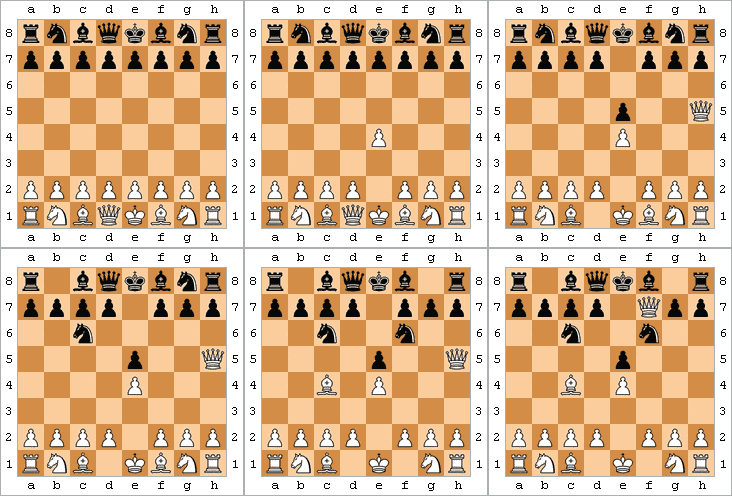 How can sentences containing descriptive and singular terms come to represent the world, without any word-world semantic relation? "If reference is not a relation between a word and some object in the world, then it is completely mysterious how can the use of a name help us pick out anything in the world" says Peter Lupu.
Perhaps it is like chess, and the notation that we use to represent the pieces and the moves. Here is one well-known and simple game:
e4 e5
Qh5?! Nc6
Bc4 Nf6??
Qxf7# 1–0
The major pieces get proper names (K for king, Q for queen). The minor pieces get descriptions ('Nc6' means that the only knight which is available to be moved to c6, is moved there). Play this game at your place, and leave the pieces where they are. I will then play the same game at my place. Then (if we have understood the language of chess correctly), the layout of pieces on my board will represent the layout on yours. So, if your board were the world, and mine was the mental representation, the one would match the other.
Saturday, May 07, 2011
Anselm without ontology
Anselm's attempted proof of the existence of God has often been criticised for the assumption that 'existence is a predicate'. Is that right? I'm going to have a stab here at representing the argument without using the word 'exists'.
The first thing to note is that Anselm gives two arguments, not one. The first is in Proslogion chapter 2, the second is shortly after in chapter 3. Another thing to note is that the argument was written in Latin, of a fiendishly difficult syntax, but I think the 1903 translation by Sidney Norton Deane is actually quite good, though not literal *.
Here is the argument in numbered steps, with minor changes that don't materially impact the sense of the original translation.
1. It is possible to conceive of a being X which cannot be conceived not to exist.
2. Such a being is greater than one which can be conceived not to exist.
3. Suppose that a being Y than which nothing greater can be conceived, can be conceived not to exist.
4. Then Y is not that, than which nothing greater can be conceived.
5. But this is an irreconcilable contradiction.
6. Therefore there is a being than which nothing greater can be conceived to exist, that it cannot even be conceived not to exist.
7. This being is you, O Lord, our God.
The real difficulty is the way that Anselm nests the verb 'conceive'. We are not just conceiving something, we are conceiving something as conceived. I will try and unpack this by representing the argument as a set of 5 steps, all of which fall within the scope of an overall 'conceive' that forms the main verb, and by translating 'x does not exist' as 'nothing is x' (thus removing 'ontology' from 'Anselm' - see the title of this post).
(0) We can conceive of an x and a y such that
(1) we cannot conceive that nothing is x
(2) nothing greater than y can be conceived
(3) we can conceive that nothing is y
(4) x is greater than y
(5) something greater than y can be conceived
Some comments. Step (3) is 'we can conceive that nothing is y' whereas strictly it should be 'nothing is y'. Anselm has "can be conceived not to exist" where the verb 'conceive' is clearly the one belonging in step (0). but then the argument is not valid. My translation is valid, however, if it follows from my conceiving that nothing is y, that by immediate reflection I can conceive of myself conceiving this, and thus conceive that I am conceive that nothing is y. Otherwise, this is a serious flaw in the argument.
For a similar reason, I move from step (4), "[We can conceive that] x is greater than y", to (5) "[We can conceive that] we can conceive that x is greater than y". If these steps are valid, it now follows that we are conceiving a contradiction, i.e. steps (2) and (5) contradict one another. Note, this does not involve an actual contradiction, only the conception or the thought of a contradiction. But this gets Anselm to where he wants, namely to a concept such that it is contradictory to think of it not being instantiated. The verb 'exist' does not appear anywhere, thus translated. The only question is the validity of the move from conceiving of an F, to conceiving of conceiving an F. Is it valid? I don't know.
* For example, he translates Nam potest cogitari esse aliquid, quod non possit cogitari non esse, which is literally, but clumsily "for it is possible that something is thought to be, which could not be thought not to be", as "For, it is possible to conceive of a being which cannot be conceived not to exist". I.e. he converts the passive to an active, and translates 'esse' as 'exist'.
The first thing to note is that Anselm gives two arguments, not one. The first is in Proslogion chapter 2, the second is shortly after in chapter 3. Another thing to note is that the argument was written in Latin, of a fiendishly difficult syntax, but I think the 1903 translation by Sidney Norton Deane is actually quite good, though not literal *.
Here is the argument in numbered steps, with minor changes that don't materially impact the sense of the original translation.
1. It is possible to conceive of a being X which cannot be conceived not to exist.
2. Such a being is greater than one which can be conceived not to exist.
3. Suppose that a being Y than which nothing greater can be conceived, can be conceived not to exist.
4. Then Y is not that, than which nothing greater can be conceived.
5. But this is an irreconcilable contradiction.
6. Therefore there is a being than which nothing greater can be conceived to exist, that it cannot even be conceived not to exist.
7. This being is you, O Lord, our God.
The real difficulty is the way that Anselm nests the verb 'conceive'. We are not just conceiving something, we are conceiving something as conceived. I will try and unpack this by representing the argument as a set of 5 steps, all of which fall within the scope of an overall 'conceive' that forms the main verb, and by translating 'x does not exist' as 'nothing is x' (thus removing 'ontology' from 'Anselm' - see the title of this post).
(0) We can conceive of an x and a y such that
(1) we cannot conceive that nothing is x
(2) nothing greater than y can be conceived
(3) we can conceive that nothing is y
(4) x is greater than y
(5) something greater than y can be conceived
Some comments. Step (3) is 'we can conceive that nothing is y' whereas strictly it should be 'nothing is y'. Anselm has "can be conceived not to exist" where the verb 'conceive' is clearly the one belonging in step (0). but then the argument is not valid. My translation is valid, however, if it follows from my conceiving that nothing is y, that by immediate reflection I can conceive of myself conceiving this, and thus conceive that I am conceive that nothing is y. Otherwise, this is a serious flaw in the argument.
For a similar reason, I move from step (4), "[We can conceive that] x is greater than y", to (5) "[We can conceive that] we can conceive that x is greater than y". If these steps are valid, it now follows that we are conceiving a contradiction, i.e. steps (2) and (5) contradict one another. Note, this does not involve an actual contradiction, only the conception or the thought of a contradiction. But this gets Anselm to where he wants, namely to a concept such that it is contradictory to think of it not being instantiated. The verb 'exist' does not appear anywhere, thus translated. The only question is the validity of the move from conceiving of an F, to conceiving of conceiving an F. Is it valid? I don't know.
* For example, he translates Nam potest cogitari esse aliquid, quod non possit cogitari non esse, which is literally, but clumsily "for it is possible that something is thought to be, which could not be thought not to be", as "For, it is possible to conceive of a being which cannot be conceived not to exist". I.e. he converts the passive to an active, and translates 'esse' as 'exist'.
Wikipedia and Truth in Fiction
I have commented more than once about erroneous information in Wikipedia becoming what Wikipedia calls a ‘reliable source’, and so turning a previously unreliable source into a reliable one. Here is another fascinating example, reported in the Telegraph today.
It began with alterations to the online Wikipedia entry of the art dealer Philip Mould, by some anonymous contributor questioning the importance of “discoveries” and suggesting other dealers had made far more important finds. Then, in October 2009, the same person sent a “press release” to national newspapers, falsely claiming Mould was having an affair with Charlotte Barton, a 42-year-old artist.
These were complete fabrications. The problem for Mould was how to remove the entries. The slanderous allegations were now in the tabloid press, and Wikipedia could now substantiate the same unsourced allegations with 'reliable sources' (yes, Wikipedia does treat tabloids as 'reliable sources' as most Wikipedian editors do not have access to proper libraries, and rely on the internet almost exclusively). So Mould was forced (apparently) into an 'edit war' with Wikipedians who were determined to defend the source.
It began with alterations to the online Wikipedia entry of the art dealer Philip Mould, by some anonymous contributor questioning the importance of “discoveries” and suggesting other dealers had made far more important finds. Then, in October 2009, the same person sent a “press release” to national newspapers, falsely claiming Mould was having an affair with Charlotte Barton, a 42-year-old artist.
These were complete fabrications. The problem for Mould was how to remove the entries. The slanderous allegations were now in the tabloid press, and Wikipedia could now substantiate the same unsourced allegations with 'reliable sources' (yes, Wikipedia does treat tabloids as 'reliable sources' as most Wikipedian editors do not have access to proper libraries, and rely on the internet almost exclusively). So Mould was forced (apparently) into an 'edit war' with Wikipedians who were determined to defend the source.
- 21:06, 11 October 2009 a Wikipedian called Trident13 adds a 'personal life' section.
- 08:51, 12 October 2009 Mould (or someone acting for him) removes it, with the comment 'unnecessary gossip deleted'.
- 10:10, 12 October 2009 some editor called Teapotgeorge adds the material back, with the comment "revert removal of referenced material by coi editor". Yes that's right. Philip Mould cannot remove this slander (a) because Wikipedians imagine the planted story is a reliable source and (b) even more hilariously the subject of the slander has a 'conflict of interest'.
- 17:24, 15 October 2009 Mould attempts to remove it again.
- 17:42, 15 October 2009 Teapotgeorge adds it back, commenting 'You have a conflict of interest please don't remove referenced material take to talk page'.
- 09:50, 16 October 2009 Mould removes once more.
- 12:32, 16 October 2009 Teapotgeorge thankfully gives up but moves the contested material to the 'talk page of the article. But it does not end there.
- 19:38, 9 December 2009 an anonymous IP address changes "The couple separated in May 2009, after Mould started an affair with artist Charlotte "Charlie" Barton." to "The couple separated in May 2009, after Mould started an affair with marriage wrecker Charlotte "Charlie" Barton." ...
- 19:40, 9 December 2009 ... then changes 'marriage wrecker' to 'notorious marriage wrecker'.
- 19:44, 9 December 2009 Teapotgeorge changes 'notorious marriage wrecker' back to 'artist', but comments that he is reverting good faith edits. Good faith?
- 00:51, 10 December 2009 The IP changes back to 'marriage wrecker'.
- 23:46, 6 May 2011 And there, incredibly, it stays for a year and a half, until yesterday when a senior Wikipedia adminstrator 'NewYorkBrad', who for once is not anonymous, being Ira Brad Matetsky of the law firm Ganfer & Shore, LLP in New York, removes it at last, commenting "Section removed. There is evidence of a deliberate plot to defame the subject of this article. For those investigating this misuse of Wikipedia, the content formerly here can be found in the page history".
Friday, May 06, 2011
An apparently serious objection
Peter Lupu makes an apparently serious objection to my view that ‘reference’ is not a relation. (Correctly stated, my view is that ‘refers to’ is a logically intransitive verb – the noun phrase which it takes as a grammatical object has no existential import). He writes “By denying that reference is a relation … [Edward] deprives language from its most important and distinctive way of communicating.” And “To deny that reference is a relation, like Edward professes to do, is to undermine one of the central purposes of language which is to communicate about the world.”
I reply as follows.
1. If any piece of language has an important communication function, we should be able to tell whether it has an important communication function. One of the most important features of communicating with someone is that they should know they are being communicated to. They should also be able to say with reasonable certainty what is being communicated.
2. It follows from this that if non-empty proper names have a vitally important communication function that empty proper names don’t have, then we should know whether or not a name is communicating this vital information, and we should be able to say precisely what the name is communicating.
3. The New Testament contains many proper names. If any of these is non-empty, it is communicating information to us in an important and distinctive way, according to Peter. If it is empty, it is communicating nothing of the sort.
4. Thus (from 2 above) we should be able to tell of that name whether it is communicating information to us in the important and distinctive way which is peculiar to non-empty names. Thus, we should be able to tell which names are empty and which are not.
5. But (assumption) we cannot tell this. We do not know for certain whether the Christ Myth theory is true or not, and thus we don't know whether the name 'Jesus' is empty or not. Thus we do not know whether the name ‘Jesus’ is communicating information to us in the important and distinctive way that is, according to Peter, the peculiar and distinctive mark of a non-empty proper name.
6. I conclude that Peter’s claim is absurd. The information that a proper name communicates to us is exhausted by what it would communicate us even if it had no ‘referent’ at all. The mere fact of the existence of a referent adds no further information to what the name already tells us.
I reply as follows.
1. If any piece of language has an important communication function, we should be able to tell whether it has an important communication function. One of the most important features of communicating with someone is that they should know they are being communicated to. They should also be able to say with reasonable certainty what is being communicated.
2. It follows from this that if non-empty proper names have a vitally important communication function that empty proper names don’t have, then we should know whether or not a name is communicating this vital information, and we should be able to say precisely what the name is communicating.
3. The New Testament contains many proper names. If any of these is non-empty, it is communicating information to us in an important and distinctive way, according to Peter. If it is empty, it is communicating nothing of the sort.
4. Thus (from 2 above) we should be able to tell of that name whether it is communicating information to us in the important and distinctive way which is peculiar to non-empty names. Thus, we should be able to tell which names are empty and which are not.
5. But (assumption) we cannot tell this. We do not know for certain whether the Christ Myth theory is true or not, and thus we don't know whether the name 'Jesus' is empty or not. Thus we do not know whether the name ‘Jesus’ is communicating information to us in the important and distinctive way that is, according to Peter, the peculiar and distinctive mark of a non-empty proper name.
6. I conclude that Peter’s claim is absurd. The information that a proper name communicates to us is exhausted by what it would communicate us even if it had no ‘referent’ at all. The mere fact of the existence of a referent adds no further information to what the name already tells us.
Monday, May 02, 2011
The 'Frodo'-Frodo theory of reference
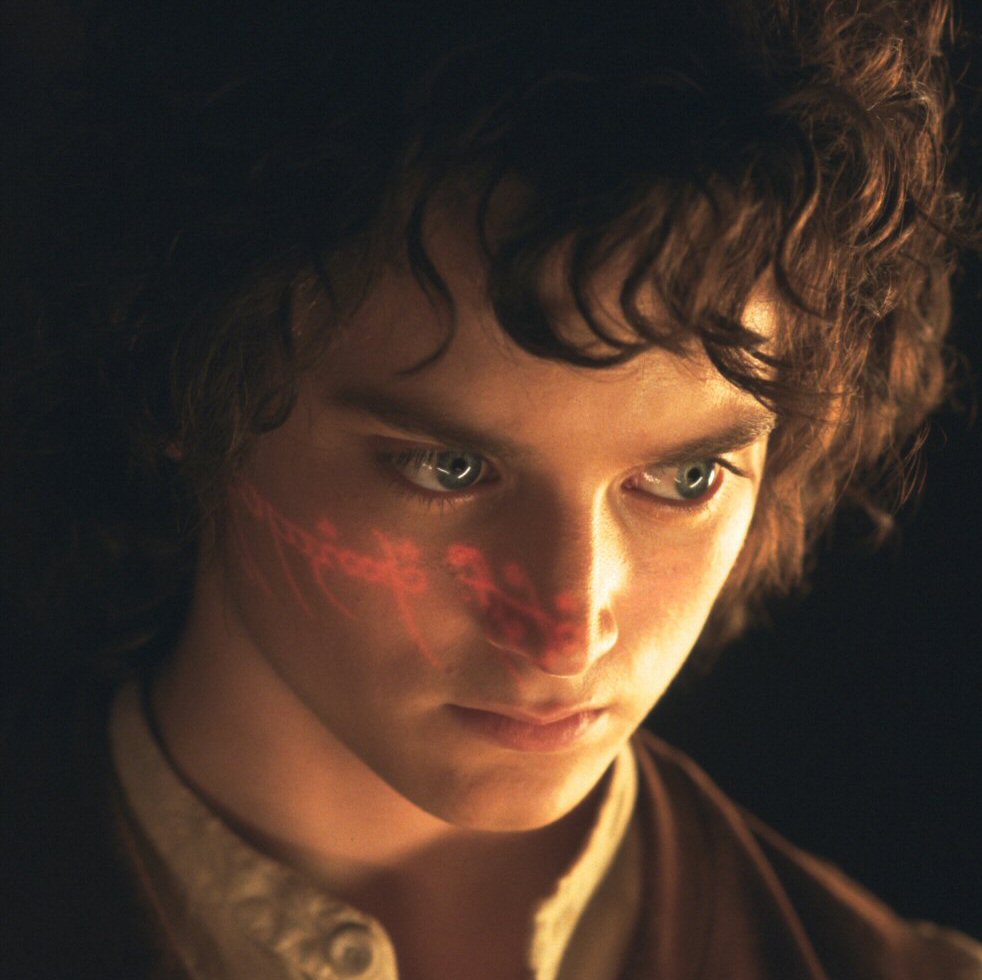
 I have argued here for a theory of reference that I have called the 'relativity theory' of reference. All reference is semantically indistinguishable from story-relative reference. Just as we can be told which hobbit carried the ring to Mount Doom (Frodo), so we can be told which US President's dog was killed by an assassin (Fido, Abraham Lincoln's dog). History, like stories about hobbits, is just a story (although history, unlike stories about hobbits, is true).
But we could equally call it the 'Frodo'-Frodo theory of reference, after the well-known 'Fido'-Fido theory of meaning. According to 'Fido'-Fido theory, the most economical explanation of the meaning of the proper name 'Fido' is to say that it means, well, Fido. Similarly, according to the 'Frodo'-Frodo theory, the simplest and the most economical explanation of the meaning of the proper name 'Frodo' is to say that it means, well, Frodo. You know, that hobbit. The one who carried the accursed Ring to Mordor.
All philosophical theories come with a curse, of course, just as the Ring did. If there were any simple explanation of a philosophical problem, the problem would have been resolved thousands of years ago. The curse of the 'Frodo'-Frodo theory is Meinong. It seems - though it actually doesn't - to commit us to the existence of non-existent objects.
It doesn't, as I say. "'Frodo' means Frodo" is true, as is "'Frodo' means someone". But this does not entail "someone is such that 'Frodo' means that person". The verb 'means' is logically intransitive. But by this time, you will have said Too long, didn't read. Oh well.
Direct Reference and the Christ Myth theory
 I posted a comment on Vallicella's blog this morning, which this post largely incorporates. According to Vallicella, most direct reference theories of proper names would seem to be committed to four theses which I summarise here.
1. A proper name denotes, designates, refers to, its bearer directly without the mediation of any properties.
2. Proper names are introduced at a 'baptismal ceremony' in which an individual is singled out as the name's bearer.
3. The connection established between name and bearer at the baptism is rigid: the name signifies that bearer in any modal context.
4. The name refers to the bearer only if there is a causal chain extending from S's use of N back to the baptism, where each user to whom the name is transmitted uses it with the intention of referring to the same object as the previous user.
This seems to leave out the most important characteristic of direct reference theory, namely the one expressed by Russell when he says "Whenever the grammatical subject of a proposition can be supposed not to exist without rendering the proposition meaningless, it is plain that the grammatical subject is not a proper name, i.e. not a name directly representing some object" (Principia Mathematica vol i p. 66). As I have argued elsewhere, this makes Frege a direct reference theorist, on one interpretation of Frege - essential reading here is Gareth Evans The Varieties of Reference, chapter 1.
This is a bullet that all direct theorists have to bite. The semantics of empty proper names do not obviously differ from that of non-empty names. For example, I cannot tell whether the 'Christ Myth' theory is true by examining the meaning of the proper name 'Christ'. (According to this theory, there never was such a historical person as Christ, the gospels are complete fiction). But according to a direct reference theorist, the name has no proper meaning at all if it is empty, and thus the semantics of empty proper names are manifestly different from non-empty proper names. Hoc absurdum et incredibile est.
The other features of direct reference theory that Bill mention are either features that follow from the primary claim of direct reference theory - the claim that the meaning is the bearer - or are props for the theory. Rigidity (thesis 3) follows from the meaning-bearer thesis. If the name has a meaning at all, it is because it means that very same object. Thus, in whatever context it has a meaning - and this includes modal contexts - it means that object. Thus it must 'rigidly' refer.
The baptismal requirement (thesis 2) follows from the primary thesis plus Russell's principle - the principle that we cannot make a judgment that is strictly about anything unless we know which object the judgment is about (see Problems of Philosophy p.58). Only when I am directly presented with an object in sense-perception can I truly know which object I am trying to name. We can 'pick out by sight or hearing or touch or otherwise sensibly discriminate' that object (Strawson, Individuals p.18). Perception affords a more 'intimate' or 'direct' relation in which the person stands to the object, in which the subject is en rapport with the object to be named.
The causal chain thesis (4) is a adjunct and buttress, rather than a consequence, of the theory. Given that the one imposing the name by baptism is en rapport with the bearer of the name, and so can use the name in a special way, and so any judgment he makes using that name, involves truly knowing which object the judgment is about, how do we explain the way in which the meaning of the name is communicated to others, who are not en rapport with the name-bearer?
Direct reference theorists introduce causation plus intention to explain this. It is by no means clear how this is to work. Suppose someone witnessed the ministry of Christ on earth, and so stood in an intimate and direct relation to the person of Christ. Then Christ died, rose, appeared to certain people, and then the witness sat down and wrote a gospel. The gospel is intended to communicate Christ's ministry and his death and resurrection to those who did not witness any of these events, and who had no such rapport with his person. How then can the name 'Christ' have the same meaning for one who was not a witness, as for one who was? In the understanding of the witness, 'Christ' has its baptismal meaning. For one who grasps this meaning, it is impossible that Christ should not exist. It would be like saying "this person here [pointing to Peter] does not exist". But in the understanding of one who was not a witness, the gospel is semantically indistinguishable from a mere story. One can read that story and reasonably ask whether Christ existed at all. Semantic analysis of the gospel will not resolve the 'Christ myth' controversy.
So it is clear that, even if the writer of the gospel is using the name 'Christ' in the special meaning that requires rapport with the person of Christ, and even if he uses it with the intention of referring to that person, he cannot communicate that special, direct meaning to the non-witness. Otherwise, as I say, the Christ myth controversy would not be a controversy.
In conclusion, the primary distinguishing characteristic of direct reference theory is that the meaning of a proper name is its bearer, i.e. that the bearer must exist in order for the name to have a meaning at all. The theses that Bill mentions are either logical consequences of this primary thesis, or are mere props, futile attempts to save it.
Sunday, May 01, 2011
Too long, didn't read
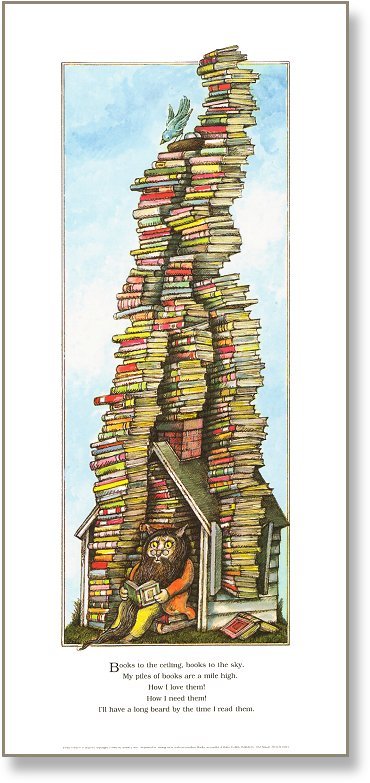 There is no greater enemy of theory that 'tl;dr' (Internet slang for 'too long: didn't read'). Schopenhauer wrote (I can't remember where) that the whole of his enormous work The World as Will and Representation was expressing a single proposition, presumably one that could not be expressed by any shorter proposition. That is bad. You should always have some shorter proposition up your sleeve for the day you are caught on a desert island and some brutish fellow requires you to defend your theory. What would Schopenhauer have done if marooned without his innumerable tomes?
 So here is my 'short', three-part defence of the story-relative theory of reference which I have been discussing throughout this year in this blog (one day I will put all this into a book, but not yet).
(1) We can tell 'which' character is being talked about in a story. War and Peace has many hundreds of minor characters but we can always (assuming we have paid attention) tell which character the author is talking about or 'referring to'.
(2) There is no obvious difference between the semantics of a made-up story, and the semantics of a historical account which is perfectly true. E.g. we cannot tell from what is said in the Old Testament whether any of the characters really existed or not. Yet we can tell Adam from Eve, Cain from Abel, Moses from Isaiah and so on. Whatever explains reference in a story, also explains reference-in-history.
(3) All the objections which argue against proper names being concealed descriptions, also apply against proper names that are used in a story. Whatever features or accidents we ascribe to a character in a story, we can deny of that character using the proper name for that character, for example.
Which of these are you going to deny? Can Tolkien not tell us which hobbit threw the ring into Mount Doom? Is there any obvious semantic difference between a narrative which might be true (the Old Testament) and one which obviously isn't true (The Aeneid)? Is there any property signified by a fictional name except: being that very character?
There is more you could overlay on the theory. You would want to distinguish it from a Meinongian theory of reference, and thus defend it against objections to such theories. We would do this by the concept of the 'logically intransitive verb' which I described elsewhere. You would want to develop some account of the 'true logical form' of logical intransitivity. You would want to develop a deeper account of the distinction between singular and general terms. All this can be done, but it take time. And also may be just too long to read. We live in the barbaric world of the internet.
Reference and Bedeutung
William Vallicella takes me to task here for saying 'referential' when 'directly referential' was meant. This is a good point, as the English word 'reference' has a variety of meanings, even in philosophical usage. Nonetheless, it gets its philosophical meaning from the translation of Frege's work in German "Über Sinn und Bedeutung" as "On Sense and Reference". The German word Bedeutung means meaning or significance.
Frege thought that the semantic power of an expression consists in its being associated with an extra-linguistic item. Even a whole sentence has a Bedeutung or reference, namely one or the other of the two Platonic objects 'The True' or 'The False'. Thus the Bedeutung or Reference or Signification of a complete sentence consists in its being True or False.
According to him, the semantics of the sentence is compositional. Each significant expression has a semantic value which affects the truth-value of the sentence in which it occurs. The semantic power of a a concept expression such as '- is wise' is to signify a Concept, a Platonic extra-linguistic entity which maps all and only wise objects to the value 'True'. The semantic value of a singular term is also an extra-linguistic item, an Object such as Socrates. Thus the proper name 'Socrates' has the role of introducing an object to the concept-expression '- is wise', thereby determining the Truth Value of the sentence 'Socrates is wise'.
If a proper name (eg. 'Bilbo') fails to be associated with an extra-linguistic item, it fails to introduce an Object to the concept-expression with which it is combined. As a consequence, the resulting sentence will (according to Frege) lack a Truth-value. It will signify neither the True nor the False and thus, since the signification of the sentence consists in its being True or False, will lack a signification. Thus Frege writes
Frege thought that the semantic power of an expression consists in its being associated with an extra-linguistic item. Even a whole sentence has a Bedeutung or reference, namely one or the other of the two Platonic objects 'The True' or 'The False'. Thus the Bedeutung or Reference or Signification of a complete sentence consists in its being True or False.
According to him, the semantics of the sentence is compositional. Each significant expression has a semantic value which affects the truth-value of the sentence in which it occurs. The semantic power of a a concept expression such as '- is wise' is to signify a Concept, a Platonic extra-linguistic entity which maps all and only wise objects to the value 'True'. The semantic value of a singular term is also an extra-linguistic item, an Object such as Socrates. Thus the proper name 'Socrates' has the role of introducing an object to the concept-expression '- is wise', thereby determining the Truth Value of the sentence 'Socrates is wise'.
If a proper name (eg. 'Bilbo') fails to be associated with an extra-linguistic item, it fails to introduce an Object to the concept-expression with which it is combined. As a consequence, the resulting sentence will (according to Frege) lack a Truth-value. It will signify neither the True nor the False and thus, since the signification of the sentence consists in its being True or False, will lack a signification. Thus Frege writes
A sentence can be true or untrue only if it is an expression for a thought. The sentence "Leo Sachse is a man" is the expression of a thought only if 'Leo Sachse' designates something. And so too the sentence "this table is round" is the expression of a thought only if the words 'this table' are not empty sounds but designate something specific for me" (Posthumous Writings, p.174).And again:
Names that fail to fulfil the usual role of a proper name, which is to name something, may be called mock proper names ... Instead of speaking about fiction we could speak of 'mock thoughts'. Thus, if the sense of an assertoric sentence is not true, it is either false or fictitious, and it will generally be the latter if it contains a mock proper name. Assertions in fiction are not to be taken seriously, they are only mock assertions. Even the thoughts are not to be taken seriously as in the sciences: they are only mock thoughts ... The logician does not have to bother with mock thoughts, just as a physicist, who sets out to investigate thunder, will not pay any attention to stage-thunder. When we speak of thoughts in what folows we mean thoughts proper, thoughts that are either true or false. (Posthumous Writings, p. 130, my emphasis).In summary. The philosophical word 'reference' derives its meaning as a translation of Frege's word Bedeutung, meaning signification. The signification of a complete sentence consists in its signifying the True or the False. Thus, on his account, a fictional name, which fails to introduce any Object to the Concept-expression to which it is adjoined in a complete sentence, and thus cannot contribute to the Truth value of the sentence, cannot have a signification either.
Subscribe to:
Posts (Atom)